
Mold and radon in Gettysburg homes: is there a link, and what to test
Mold and radon do not cause each other, but they enter Adams County basements the same way. Whether to test for both, the order of work, and who is certified.
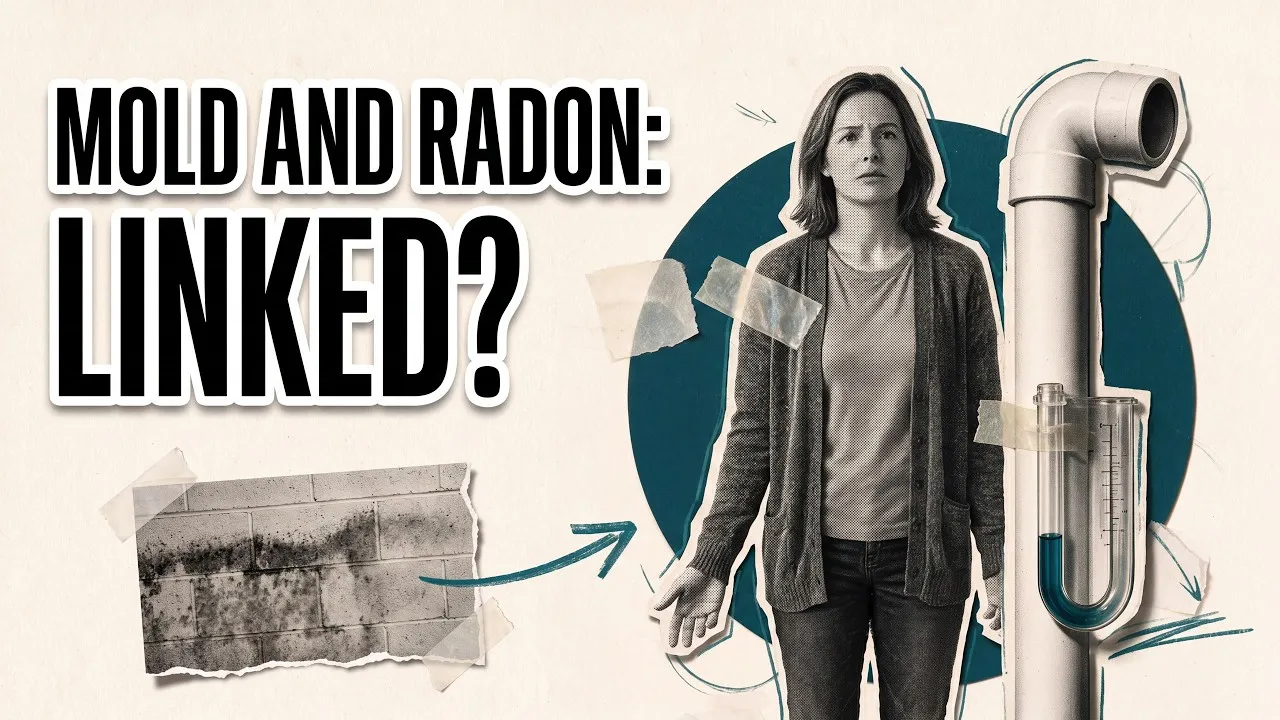
Mold does not cause radon, and radon does not cause mold. They turn up in the same Gettysburg basements because they get in through the same cracks in the foundation, pulled by the same pressure difference between the soil and the house. Test for radon anyway; every house in Adams County should be. No single test covers both.
What they share
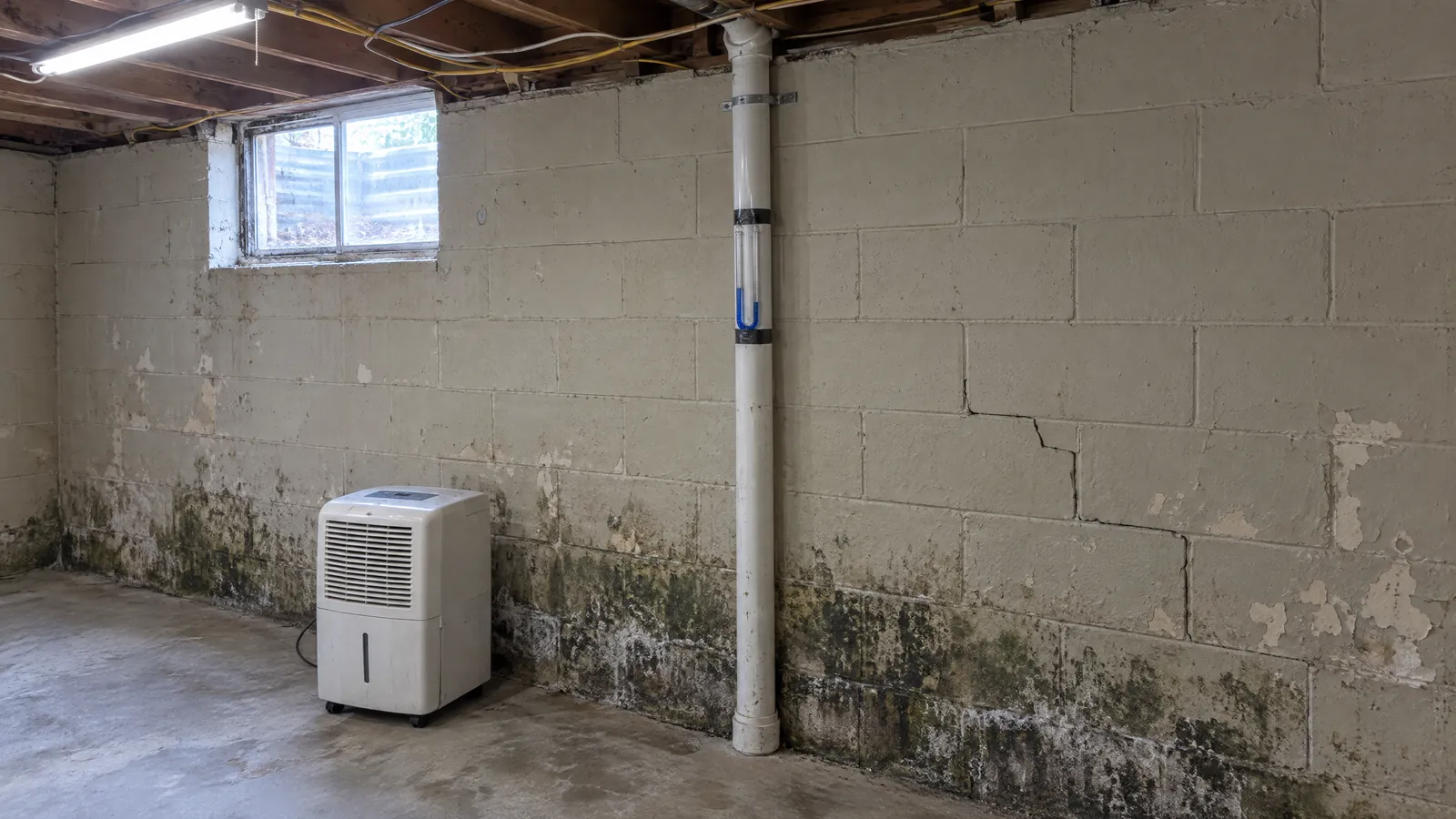
Radon enters through cracks in the slab, construction joints, cracks in block walls, gaps around service pipes, sump pits, floor drains and the bare earth of a crawlspace. Water vapor and liquid water use the same openings.
The driver is the same. Air pressure inside a house is usually lower than in the soil around it, so the house acts like a vacuum on the ground beneath, and what comes in is humid soil air carrying radon. An EPA-funded study of three houses near Harrisburg estimated more than 25 kilograms of water a day could enter one basement through air flows, a significant share of it soil air. Most of the houses with moisture complaints sat on hollow block foundations, and hollow block cores are also a known radon pathway.
That describes much of Adams County, where more than a third of houses were built before 1970 and about 15 percent before 1940: stone or brick under the old ones, block under the mid-century ones, neither airtight. See basement mold in Adams County homes.
Video answer: Are mold and radon related? What to test in a Gettysburg home
What they do not share
The cause. Radon is a radioactive gas produced as uranium in soil and rock decays. Mold is a living organism that needs moisture and an organic food source, which is why the EPA's rule is that mold control is moisture control. No EPA, CDC or Pennsylvania DEP document describes a causal link in either direction.
The health effect. Radon is the second leading cause of lung cancer in the United States; the EPA estimates about 21,000 deaths a year, with the risk far higher for smokers. Mold's documented effects are upper respiratory symptoms, coughing and wheezing, worse asthma in people who already have it, and lung infections in people with weakened immune systems. The CDC says "black mold" should be treated like any other mold. See the warning signs of mold exposure.
The trade. Radon testing and mitigation in Pennsylvania are state-certified. Mold remediation is not licensed at all.
The test. A radon test measures a gas, in picocuries per liter, over days or months. A mold inspection looks for moisture and growth. Neither detects the other.
Testing for radon when you have mold
Yes, test. The EPA and the Surgeon General recommend testing every home below the third floor, mold or no mold.
Adams County is EPA Radon Zone 1, the highest-potential category, and the EPA adds that every house should be tested regardless of zone. Statewide, DEP says about 40 percent of homes tested are above the 4 pCi/L action level; its database of 2.3 million basement tests from 1986 to 2022 shows a mean of 6.8 pCi/L, a median of 2.8 and 38 percent at or above 4. DEP's radon pages have a ZIP code lookup of average results.
Test in the basement, preferably during the heating season, as DEP advises. Confirm any result above 4 pCi/L with a second test before paying for a system. The EPA says to fix at 4 or above and to consider fixing between 2 and 4. Retest every two years after a system goes in, and after any major renovation.
Mold testing is a different decision. The CDC does not recommend routine mold sampling: there are no accepted standards for acceptable levels, and a sample cannot predict whether anyone will get sick. If you can see the mold and know where the water came from, spend the money on fixing it. Mold inspection and testing covers when testing does earn its keep, and buying or selling a house with mold covers the home-sale case.
The order of work if you need both
- Fix the water first. Mold returns unless the moisture problem is fixed before cleanup finishes, and the Harrisburg study found active radon systems are not well suited to basements with water coming in.
- Then the mold remediation. Remediation can mean removing slab sections, drywall, block-wall facing or crawlspace floor coverings. Doing that first avoids damaging a radon pipe, suction pit or membrane, and lets the radon contractor seal the new openings. Sealing helps, though the EPA does not recommend sealing alone to reduce radon.
- Then the radon system, with a post-mitigation test.
- Then a final radon test, the check that nothing was undone.
One caveat about step 2. The EPA calls for any job over about 10 square feet to run under negative pressure, usually a HEPA-filtered fan exhausting outdoors. Radon entry is pressure-driven, so that fan may temporarily raise radon entry while it runs. No study has measured the effect, and it ends when the machines are switched off. It is not a reason to skip remediation, only a reason to test afterwards if you have not tested before.
The order flips in one case. Radon has a defined threshold and a one-day fix; mold work can wait on insurance, quotes or dry weather. If a confirmed test is well above 4 pCi/L, especially with a smoker in the house, do the radon system first and have the radon contractor consulted before the mold crew cuts into anything.
If you already have a radon system, or are getting one, the York radon site's sister guide answers the other half: Does a radon mitigation system reduce humidity, or can it cause mold?
Who to hire for each
Radon. Pennsylvania has required DEP certification for radon testers, mitigators and laboratories since 1988 under the Radon Certification Act. DEP's Radon Services Directory, updated monthly, lists them by county; check for a current DEP ID card (mitigators carry 7000-series numbers, testers 8000-series). Expect a written post-mitigation test, a labeled system with a manometer gauge, and a backdraft check if the house has a natural-draft furnace or water heater.
Mold. Pennsylvania does not license mold remediation contractors. The only state requirement is Attorney General registration as a home improvement contractor for anyone doing $5,000 or more of such work a year, with $50,000 of insurance each for bodily injury and property damage. That is a registration, not a competency test, so check the rest yourself: registration number, insurance certificate, a written scope that fixes the moisture source first, containment and HEPA exhaust on anything over about 10 square feet, post-remediation verification, references, and voluntary IICRC training in the S520 mold standard.
Some firms do both and say so. Most do one. See what remediation costs for what a mold quote should contain.
Questions people ask
Does radon check for mold? Can a radon test detect mold? No. A radon test measures a radioactive gas over a set number of days and cannot detect spores or moisture. Mold is found by looking for water damage and growth, and if needed by air or surface sampling.
Does Pennsylvania have high radon? Yes. DEP calls it one of the most serious radon problems in the country: about 40 percent of homes tested are above 4 pCi/L, and 49 of the 67 counties, Adams among them, are in the EPA's highest zone.
Does finishing a basement reduce radon levels? No. The EPA says finishing a basement can change the level of radon in any home and tells owners to test again afterwards. Finishing also puts drywall and carpet against damp walls, which is what basement mold needs.
How much does a radon test cost in PA? DEP puts a home test kit at about $20 to $30, sends a free confirmation kit if a result exceeds 100 pCi/L, and a free long-term kit within a year of installing an active system. Mold inspection prices are in the testing guide linked above.
Finding companies in Adams County
This site is a directory. It lists mold remediation and testing companies serving Gettysburg and Adams County, with a separate page for inspection and testing firms, some of which test only, the right choice for an independent result. For radon, use DEP's Radon Services Directory and check the certification number; where a listed firm also does radon work, check it the same way.